Can Heavy Rain Make a Tree Unsafe?


Most homeowners associate dangerous trees with strong winds, but prolonged heavy rain can create problems even before a storm arrives.
When soil becomes saturated, the ground around a tree can lose some of the firmness that helps support its root system, particularly where drainage is poor or roots have previously been damaged. Mature trees usually cope perfectly well with wet weather, but changes in the ground can expose existing weaknesses and occasionally make an otherwise stable-looking tree more vulnerable.
Why Waterlogged Ground Matters
A tree relies on its root system not only for water and nutrients but also for anchorage. After prolonged rainfall, heavily saturated soil can become softer and less resistant to movement, particularly on exposed sites, slopes or areas with clay-heavy ground. This does not mean every large tree becomes unsafe after several wet days, but trees with compromised roots, existing decay or an uneven canopy may be more susceptible to movement when the surrounding soil is exceptionally wet.
Look for Movement Around the Base
One of the most important areas to check after persistent rain is the ground immediately surrounding the trunk. Newly raised soil, cracking around the root plate or a section of ground appearing to lift can indicate that the root system has moved. These changes can sometimes be subtle, so comparing the tree with how it normally sits in the landscape is useful. If the soil appears disturbed or the tree has noticeably changed position, we would recommend having it professionally assessed rather than waiting to see what happens during the next period of high winds.
Has the Tree Started Leaning?
Many healthy trees naturally grow at an angle, and an established lean is not necessarily a cause for concern. A tree that has recently begun leaning, however, is very different. A noticeable change following prolonged rainfall can suggest movement within the root system, particularly if accompanied by disturbed soil at the base. We covered several other signs of potential instability in our previous blog, Is That Tree Dangerous? 8 Warning Signs Every Homeowner Should Know, which is worth referring to if you have broader concerns about the condition of a mature tree.
Existing Root Damage Can Increase the Risk
Problems caused by wet ground are more significant when a tree's root system has already been compromised. Building work, trenching, new driveways, soil compaction and excavation can all damage or restrict important structural roots, sometimes without creating an obvious problem immediately. A tree may continue appearing healthy above ground while having reduced anchorage below, and exceptionally wet or windy weather can be the event that finally exposes the weakness.
Heavy Rain Can Expose Decay
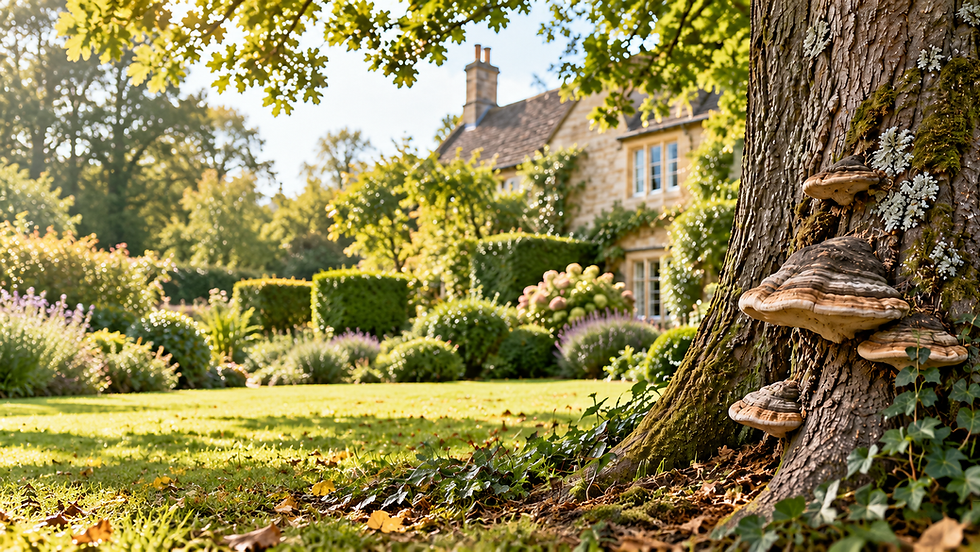
Water itself does not suddenly cause a healthy tree to rot, but persistent wet conditions can draw attention to problems that have been developing for much longer. Fungal growth, cavities, decaying roots and damaged sections of trunk may indicate an underlying structural issue that deserves investigation.
What About Large Branches After Heavy Rain?
Branches can also become considerably heavier when foliage is saturated, particularly on trees with dense canopies. Where a branch already contains cracks, decay or weak unions, the additional loading may increase the likelihood of failure. This is why deadwood and previously damaged limbs should not be ignored simply because the weather is calm. Our tree surgery services in Oxfordshire include pruning, crown work, deadwood management and emergency tree work where professional intervention is required.
Should You Reduce a Tree Because the Ground Is Wet?
Not automatically. Crown reduction should never be carried out simply because there has been a period of heavy rainfall. The decision needs to be based on the tree's species, condition, structure and surrounding environment. Where excessive branch length or canopy weight is contributing to an existing structural concern, appropriate crown work may form part of the solution, but unnecessary pruning can create its own problems. The objective should always be targeted management based on what the individual tree actually needs.
When Does It Become an Emergency?
A newly leaning tree, visible root plate movement, major cracking, hanging branches or a tree that has partially failed should be treated differently from general concerns about wet ground. Where there is an immediate risk to people, buildings, roads or neighbouring property, keep clear of the area and arrange professional advice as soon as possible. Attempting to remove large branches or deal with an unstable tree yourself can be particularly dangerous because the loads within a damaged tree are difficult to predict.
Tree Surgery Across Oxfordshire After Severe Weather
Elm Park Tree Surgery works with homeowners throughout Oxfordshire, including Oxford, Henley, Sonning Common, Goring, Pangbourne and Woodcote. We can assess trees following prolonged rainfall, storms or other severe weather and advise whether monitoring, pruning, crown work, bracing or removal is appropriate. Our approach is to retain healthy trees wherever practical while addressing genuine risks before they develop into larger problems.
Concerned About a Tree After Heavy Rain?
If a tree has started leaning, the ground around its base has moved or you have noticed damaged branches following severe weather, we can take a closer look. Visit our Oxfordshire tree surgery page to learn more about the services available, or use the Elm Park Instant Quote system to provide details of the work and get started.
Elm Park Tree Services is a team of NPTC qualified and highly skilled tree surgeons based in Abingdon, Oxfordshire. With over 18 years experience we can accommodate a project of any size. Get a quote today >