

How Can You Prepare Your Trees for Autumn and Winter Storms?

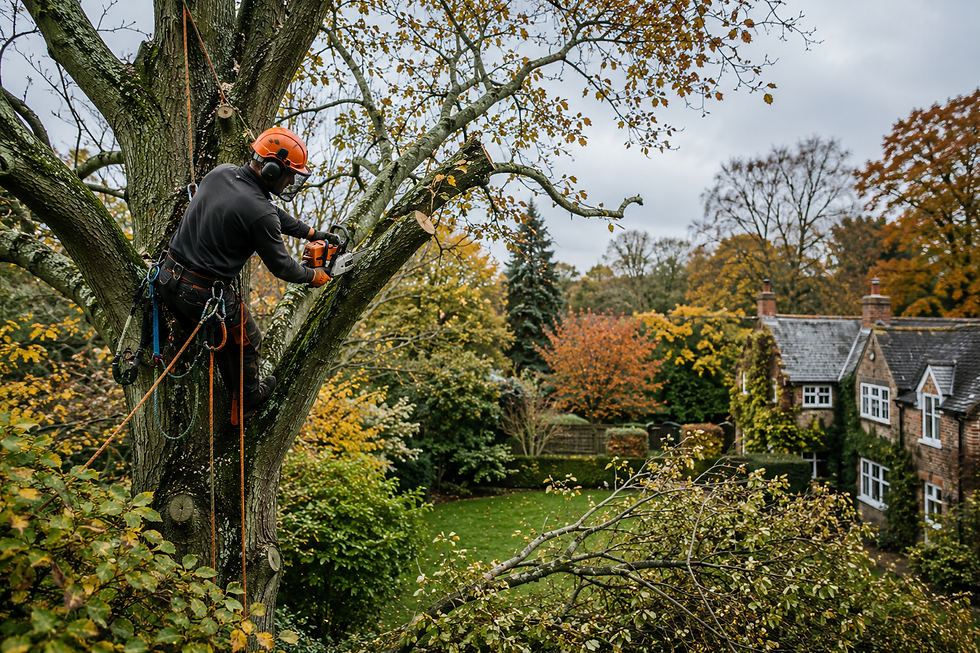
Autumn and winter weather can expose weaknesses in trees that may have gone unnoticed throughout the summer. Strong winds, prolonged rainfall and saturated ground all place additional pressure on branches, trunks and root systems, particularly in mature or previously damaged trees.
You can't storm-proof a tree, but sensible inspection and maintenance can reduce avoidable risks. For homeowners across Oxfordshire, the period before the worst weather arrives is a good opportunity to look more closely at established trees and deal with obvious problems.
Start With the Branches Above Your Property
A large branch doesn't need to be directly above your house to cause damage. Limbs extending over driveways, sheds, greenhouses, paths and neighbouring gardens can all become a concern if they are weakened. Look for dead branches, broken sections, hanging limbs or areas where the canopy appears noticeably different from the rest of the tree. Deadwood is particularly important because it no longer has the flexibility of healthy living wood. Professional deadwood removal can address hazardous branches while retaining the healthy parts of the tree.
Look for Changes in the Trunk
Most homeowners see their trees every day, which can actually make gradual changes difficult to notice.
Before winter, take a closer look at the main trunk and larger branch unions. New cracks, splits, cavities, damaged bark or visible areas of decay are all worth investigating. Fungal growth around the trunk or base can also indicate underlying issues, although the presence of fungi doesn't automatically mean a tree is dangerous. A professional assessment is the best way to determine whether there is a genuine structural concern.
Has the Tree Started Leaning?
Plenty of perfectly healthy trees grow at an angle, so a leaning tree isn't automatically unsafe. What matters more is whether the position has changed. A tree that has recently begun leaning, particularly following strong winds or prolonged rainfall, may have experienced movement within its root system. Raised or cracked soil around the base can also warrant closer inspection. If you notice a significant change, arranging an assessment sooner rather than waiting for the next storm is sensible.
Consider the Density of the Canopy
A very dense canopy can place considerable strain on a tree during strong winds. The appropriate solution, however, isn't simply to remove as many branches as possible. Depending on the tree, carefully planned crown work may help manage its structure while retaining a natural, balanced appearance. Crown thinning, reduction or selective pruning may be considered according to the species, age and condition of the tree. Poorly executed or excessive pruning can create additional problems, which is why substantial canopy work should be professionally assessed.
Don't Forget About the Ground
Winter tree problems aren't always visible above your head. Periods of prolonged rainfall can saturate the soil surrounding a tree. Root systems provide essential structural support, and changes in the ground can affect stability. Homeowners should pay particular attention to mature trees following very wet weather, especially if the tree is close to the house, driveway or another frequently used area. Construction work and excavation around trees can also damage important roots, potentially creating problems that only become apparent later.
Deal With Previous Storm Damage
A tree may survive a storm without falling but still sustain damage. Partially broken branches, damaged unions and smaller cracks can remain within the canopy long after the weather improves. If these aren't identified, the next period of high winds may expose the weakness. This is why checking trees after significant storms is worthwhile even when there is no obvious major damage from ground level.
Should Large Trees Be Reduced Before Winter?
Not automatically. A large tree isn't inherently more dangerous simply because of its height. Healthy mature trees are naturally capable of coping with considerable wind loading.
Tree surgery should be based on the condition and structure of the individual tree rather than carried out simply because winter is approaching. In some cases, no work will be necessary. In others, targeted pruning, deadwood removal, crown work or bracing may be appropriate. The aim should always be proportionate tree management rather than unnecessary intervention.
A Little Preparation Can Prevent Bigger Problems
The best time to discover a weak branch isn't when it lands on the driveway. Checking trees periodically gives homeowners an opportunity to identify changes and arrange maintenance in a controlled manner. It can also reduce the likelihood of requiring urgent tree surgery immediately after severe weather. This is particularly worthwhile for mature trees positioned close to houses, roads, parking areas, footpaths and neighbouring properties.
Preparing Trees Across Oxfordshire for Winter
Elm Park Tree Surgery provides professional tree care for homeowners throughout Oxfordshire, including Oxford, Henley, Sonning Common, Goring, Pangbourne and Woodcote. We can assess established trees, identify potential concerns and recommend appropriate work where required, from pruning and deadwood management to crown work and tree removal.
Are Your Trees Ready for Winter?
If you have mature trees close to your home or have noticed dead branches, structural changes or previous storm damage, arrange an assessment before winter weather arrives. Contact Elm Park Tree Surgery for professional tree surgery throughout Oxfordshire, including Henley, Sonning Common, Goring, Pangbourne and Woodcote.
Elm Park Tree Services is a team of NPTC qualified and highly skilled tree surgeons based in Abingdon, Oxfordshire. With over 18 years experience we can accommodate a project of any size. Get a quote today >


