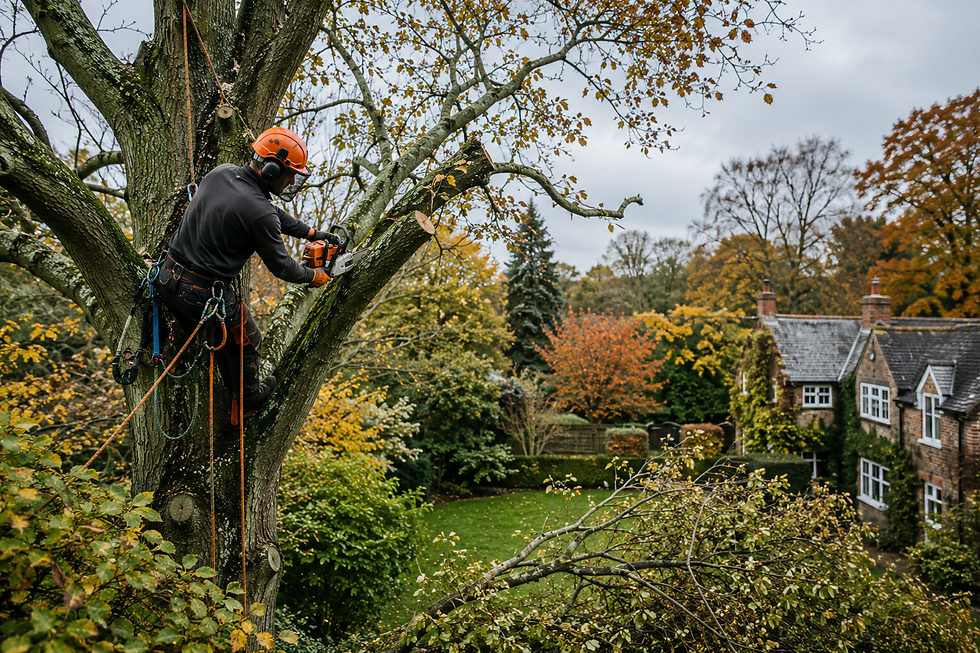
Can a Split or Cracked Tree Be Saved?


A visible crack or split in a tree can be alarming, particularly when it appears in the main trunk or between two large stems.
Although some defects require urgent attention, a damaged tree does not always need to be felled. Depending on its condition, structure and location, professional pruning or tree bracing may provide enough support to retain it safely. The important first step is understanding why the split has developed and whether the surrounding wood remains strong enough to support the tree.
Why Do Trees Develop Splits?
Splits can develop for several reasons, including storm damage, excessive branch weight, weak growth patterns, decay or sudden changes in temperature. Trees with two large stems growing from a narrow V-shaped union can be particularly vulnerable because bark may become trapped between them, preventing a strong structural connection from forming. As the stems increase in size and weight, the pressure on that union grows, sometimes creating a visible crack or causing the stems to begin separating.
Does a Crack Mean the Tree Is Dangerous?
Not every crack means that a tree is about to fail, but it should not be ignored. The level of concern depends on the depth and position of the split, the size of the affected limbs, the condition of the surrounding wood and what lies beneath the tree. A defect above an unused area of a large garden presents a different risk from one directly over a house, driveway or public footpath. Our previous article, Is That Tree Dangerous? 8 Warning Signs Every Homeowner Should Know, explains some of the other changes that may indicate a tree requires professional attention.
When Can Tree Bracing Help?
Tree bracing may be suitable where a tree has a structurally weak union but is otherwise healthy enough to retain. A support system can help reduce movement between vulnerable stems or branches, distributing the load and lowering the likelihood of sudden failure. Bracing is often considered for valuable mature trees where complete removal would be unnecessary or undesirable, but it is not a universal repair. We assess the tree as a whole before deciding whether support is likely to provide a meaningful long-term benefit.
What Does Tree Bracing Involve?
Depending on the defect, tree bracing may involve specialist cables, flexible support systems or rigid rods installed between stems or branches. The objective is not to make the tree completely immovable, as natural movement helps trees develop strength, but to limit excessive movement around the weakened area. The type and position of the system must be selected carefully so that it supports the tree without creating unnecessary damage or transferring pressure to another part of the structure.
Can Pruning Reduce the Pressure?
In some cases, carefully planned pruning can be used alongside bracing to reduce the load placed on a weak union. Shortening long or heavy branches may decrease leverage and make the affected part of the tree easier to manage. This does not mean removing large amounts of growth indiscriminately, as excessive pruning can stress the tree and encourage weak regrowth. Any crown reduction or selective pruning should be based on the species, age and condition of the tree, with the aim of producing a balanced result rather than simply making it smaller.
When Is Bracing Not Appropriate?
Bracing cannot restore sound timber where extensive decay has already developed, and it will not make every badly damaged tree safe. If the main trunk is severely compromised, the root system is unstable or the split has progressed too far, removal may be the more responsible option. The same applies where the consequences of failure are particularly high and the remaining structure cannot be managed reliably. Our tree surgery services in Oxfordshire include professional assessment, crown work, deadwood management, bracing and controlled tree removal where required.
What Should You Do After Storm Damage?
If a split appears following strong winds or heavy rain, keep people and vehicles away from the area beneath the tree until it has been assessed. Fresh cracks can be difficult to judge from the ground, and damaged branches may still be held under considerable tension. Warning signs such as widening gaps, hanging limbs, creaking sounds, exposed roots or visible movement should be treated seriously. Attempting to secure or cut a large damaged branch without the correct equipment and experience can make the situation considerably more dangerous.
Does a Braced Tree Need Future Inspections?
Yes. Tree bracing is a management measure rather than a permanent cure, so the tree and support system should be checked periodically. Trees continue to grow, branch loads change and existing defects may develop over time. Regular inspections allow the system to be adjusted or replaced where necessary and provide an opportunity to identify any additional pruning or maintenance requirements. Ongoing monitoring is particularly important for mature trees positioned close to buildings, access routes or neighbouring properties.
Professional Tree Bracing Across Oxfordshire
Elm Park Tree Surgery provides professional tree assessment, bracing and wider tree surgery services throughout Oxfordshire, including Oxford, Henley, Sonning Common, Goring, Pangbourne and Woodcote. We assess each tree individually, considering its condition, location and long-term prospects before recommending support, pruning or removal. Wherever practical, our aim is to retain healthy mature trees while ensuring genuine structural concerns are managed responsibly.
Concerned About a Split or Weakened Tree?
If you have noticed a crack between two stems, a damaged branch union or another structural change in a tree, arrange an assessment before the problem becomes more serious. Visit our Tree Surgery Oxfordshire page to learn more about the work we provide, or use the Elm Park Instant Quote system to send us details and photographs of the tree.
Elm Park Tree Services is a team of NPTC qualified and highly skilled tree surgeons based in Abingdon, Oxfordshire. With over 18 years experience we can accommodate a project of any size. Get a quote today >